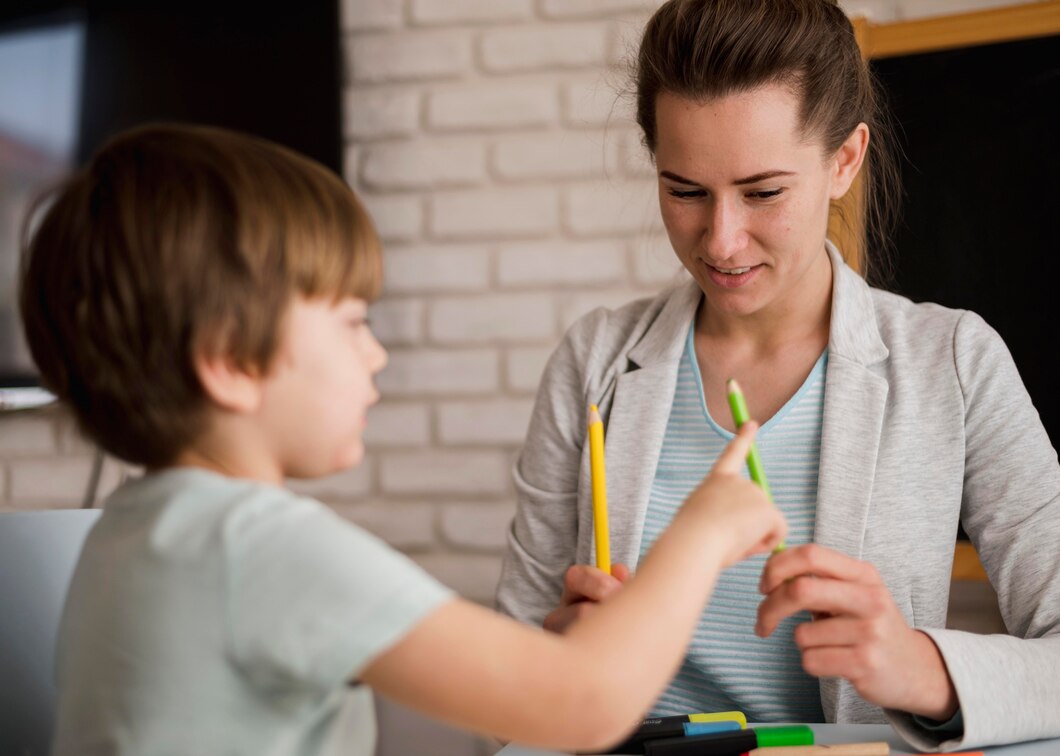
Home-based support of special students' education can be quite fulfilling and at the same time present certain difficulties. Children with special needs often require tailored approaches and additional resources to thrive academically. By creating a supportive and structured home environment, parents and caregivers can reinforce the learning that takes place in the classroom and help their children reach their full potential.
Let’s take a look at various strategies should be employed to enhance learning for special students with special emphasis on the following areas:
Understanding Your Child’s Learning Style
The process of learning could be easier and more effective at home: The first step to supporting learning at home is, therefore, to establish a knowledge of how your child learns best. Special needs learners, especially, require person – centred learning practices to enhance their development and respond to special needs.
Visual Learners
The learners who would prefer visual stimuli can be helped through the use of charts, diagrams, flash cards, and videos among others. Teach the children to draw and use illustrations in the lessons, and teach them to use pictorial representation of events that they have to follow in the day.
Auditory Learners
These children also require instruction in the form of lectures most of the time so that they understand everything properly. Some ways of addressing this issue are: reading the alphabet, numbers, etc., singing while teaching, and using audiobooks for teaching. Verbal communications, where a person explains something to others in spoken words and also, having verbal communication can also assist in the reinforcement of concepts.
Kinesthetic Learners
Second, kinesthetic learning is a kid's learning style that needs physical activity to grasp the knowledge. Make use of concrete objects like model making, use of to help learners feel or use their hands, acting as different characters. It also means that allowing them to take quick breaks for physical activity will also assist in helping them pay more attention during learning sessions.
Mixed Learners
It is also important to recognise that certain children may need to learn in both ways – a dual learning style process. Watching the reactions of your child in class can help you define elements of classroom instruction that may be most effective for your child.
Creating a Structured Learning Environment
Schooling becomes relevant for a structured environment that assists special students into gaining an academic achievement. Here’s how to create a supportive learning space at home.
Designate a Learning Area
Ensure that in your home there is a particular space designated for the learning activities to take place. This space should be devoid of distraction and should possess all items that is essential for learning such as a desk, chair and shelf to store books. Make sure that the environment is well lit and comfortable, thus, enhancing the learning environment.
Establish a Routine
It is therefore very important to be consistent in helping children with special needs. Set a timetable that allocates particular hours in the day for learning, time for the breaks and any other activities. Visual schedules or charts should also be used to let your child know what is going on so that he or she will not become easily agitated and will not feel that the routine and environment are too unpredictable.
Use Positive Reinforcement
Praise your child and push them to the right direction through the use of positive words. Encourage them, give small rewards for the achievements and make sure that they know that you are aware of their successes. Reward increases self-esteem and positive behaviour concerning learning processes enhances better habits.
Minimise Distractions
There are likely to be distractions in the learning environment and therefore these should be kept to the bare minimum. This may involve switching off the television, preventing a child from playing with toys when there is a lesson going on, or even getting the child to stop talking.
Adapting Lessons to Your Child’s Needs
Adjusting your lessons to your child’s abilities and development level should be your top priority. Here are some strategies to consider.
Simplify Instructions: Avoid approaching the task as a single large entity and it is better to divide the instructions. Effective communication to patients, family members and other healthcare workers should involve the use of simple language and reinforcement of messages. Incorporate Interests: Make learning fun by making lessons more interesting by teaching issues that your child loves. For instance, if your child is interested in animals, make books, games and other exercises, and projects connected with animals.
Use Assistive Technology: It is thus possible to agree that assistive technology can also play a significant role in learning that takes place at home. This may range from speech-to-text systems, computer applications consisting of learning games or communication aids.
Provide Sensory Breaks: Some children with special needs will need a break from sensory stimulation so as to bring order to their thoughts and emotions. Use transitions between lessons where your child takes time to engage in either calming or activating breaks that involve the use of sensory toys, stretching, or taking a walk.
For students with special needs, learning at home can be very challenging, and hence there is a need to support them in a special way. By implementing the strategies discussed in this blog, parents and caregivers can create an environment that nurtures both academic growth and emotional well-being. Remember, every small effort contributes to your child's success, and your involvement plays a significant role in helping them achieve their educational goals. Together, we can empower special students to thrive, both at home and in their broader learning environments.


