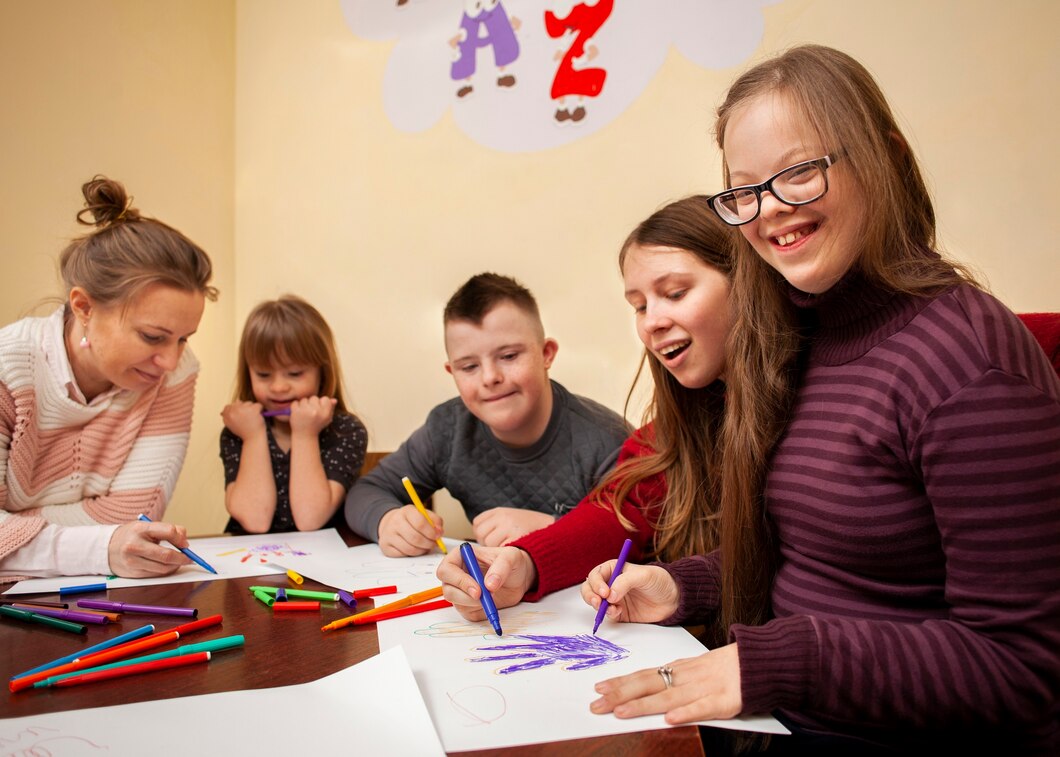
Interpersonal communications is part of self- development, and for students with exceptionalities, it is a critical aspect. It has been noted that children with special needs have difficulty in making friends and getting along with peers. Moreover, they also face difficulty in performing effectively in social situations. However, with encouragement and intervention, these children are able to learn how to make friends.
Let’s discuss why social skills are crucial in the developmental process of children and young adults with special needs.
The Importance of Social Skills for Special Students
Social skills on the other hand refer to those skills that individuals apply in their day to day interactions with other persons. For special students, social skills are crucial for several reasons.
Enhancing Communication
To understand interpersonal communication, it is significant to note that communication is basically a social process. Social skills enable special students to assess and communicate in a valid manner their ideas, emotions or even needs through spoken language, sign language or other modes.
Building Relationships
The students with special needs are able to learn social skills to enable them to have friends. These relationships allow a person to feel that they are wanted, needed, and give them experiences they can share with others.
Navigating Social Situations
Social skills can be defined as the skills that enable special students to relate and conform to the expectations of other people, follow the rules of social behaviour and be able to listen and react to social signals and situations. This makes them be at ease and have confidence when they are in school, cluster, classroom, play ground among other places.
Promoting Independence
Good social skills are useful in a student’s day to day lives especially when as a student he or she is able to manage himself or herself in a social setting. The children can also deal with peers, self-argument, and engage in group based exercises.
Strategies for Developing Social Skills
Teaching special students how to socially interact involves time, effort and the methods used will depend on the type of disability displayed by the kid. Here are some strategies that can be effective.
Role-Playing and Social Stories
Various social scenes make it possible for the special students to act appropriately or how they should respond to certain stimuli. Social stories, which are scripts that can be both written and acted out, and contain descriptions of a specific situation and the correct social response, can also be used to teach individual target skills such as greeting, sharing and so on.
Visual Supports
Some students can be helped by graphic displays such as ‘picture or chart’ or by ‘cue cards’ or ‘some sort of script’. For instance, a teacher may use a manipulator such as a visual cue card bearing pictures of people wearing different facial expressions to enable the student to understand how others feel.
Positive Reinforcement
This means that to promote social relations, special students should be motivated to appropriate social relations through positive incentives. Small reinforcers such as prizes, points, candies or small toys can be used to encourage positive behaviours such as sharing toys, asking questions, or speaking politely.
Peer-Mediated Instruction
Peer coaching as per this model involves defining and explaining roles of special students while normally developing peers are prepared to engage and facilitate interactions with the special students in social situations. This enables special students to be able to practise their social skills with the normal students so as to improve on their natural interactions.
Structured Social Skills Groups
Social skills groups are designed to encompass a specific structure in accordance with which the special student works on social learning with a teacher or a therapist. These groups are usually based on particular aspects of social skills including eye contact, listening and conflict solving skills within a context of learning through games, discussions and drama.
Creating Opportunities for Social Interaction
Special students should be given a chance to practise and apply what they have learnt in terms of social skills. Here are some ways to create these opportunities.
Inclusive Classroom Activities
An effective approach towards the autism students is the integrated activities, where special students mingle with other students of the class. Group activities that entail working in a group, games and discussions in class enable students to learn social skills while under limited pressure from the rest of the group members.
Extracurricular Activities
Being able to engage in sports, clubs or art classes gives special students more chances of being with other students with like minds. These environments are relatively more environmentally uninformed compared to the classroom and this enables students to develop more natural interactional communication.
General or Mass Activities
In this regard, festival events, sport events or other social events in a community allow special students to develop social skills in real situations. These experiences open other social circles for them and they see and participate in different social dynamics.
Playdates and Small Group Activities
In classrooms and/or lectures special students must be allowed to socialise through playdates or small group activities with peers. Such settings make it easier to have one on one or small group interactions than having a large group.
Family Involvement
Another requirement that is significant for the child’s learning process is the role of the family members as such beings strongly influence the process of forming the necessary social skills. Praise and reward any instances of modelled and practised social skills by engaging families in more formal or leisurely activities where the skills may be rehearsed in familiar low risk settings.
Acquisition of social skills is critical in the learning processes for special students in their educational advancement. These students, if provided with the necessary strategies, opportunities and support can develop the interpersonal skills they need in order to interact appropriately, form social relationships and engage in social relationships confidently. Ensuring that students with special needs engage in social relatedness and corresponding with educators as well as other specialists and parents can assist students with such needs to acquire social as well as emotional development.


