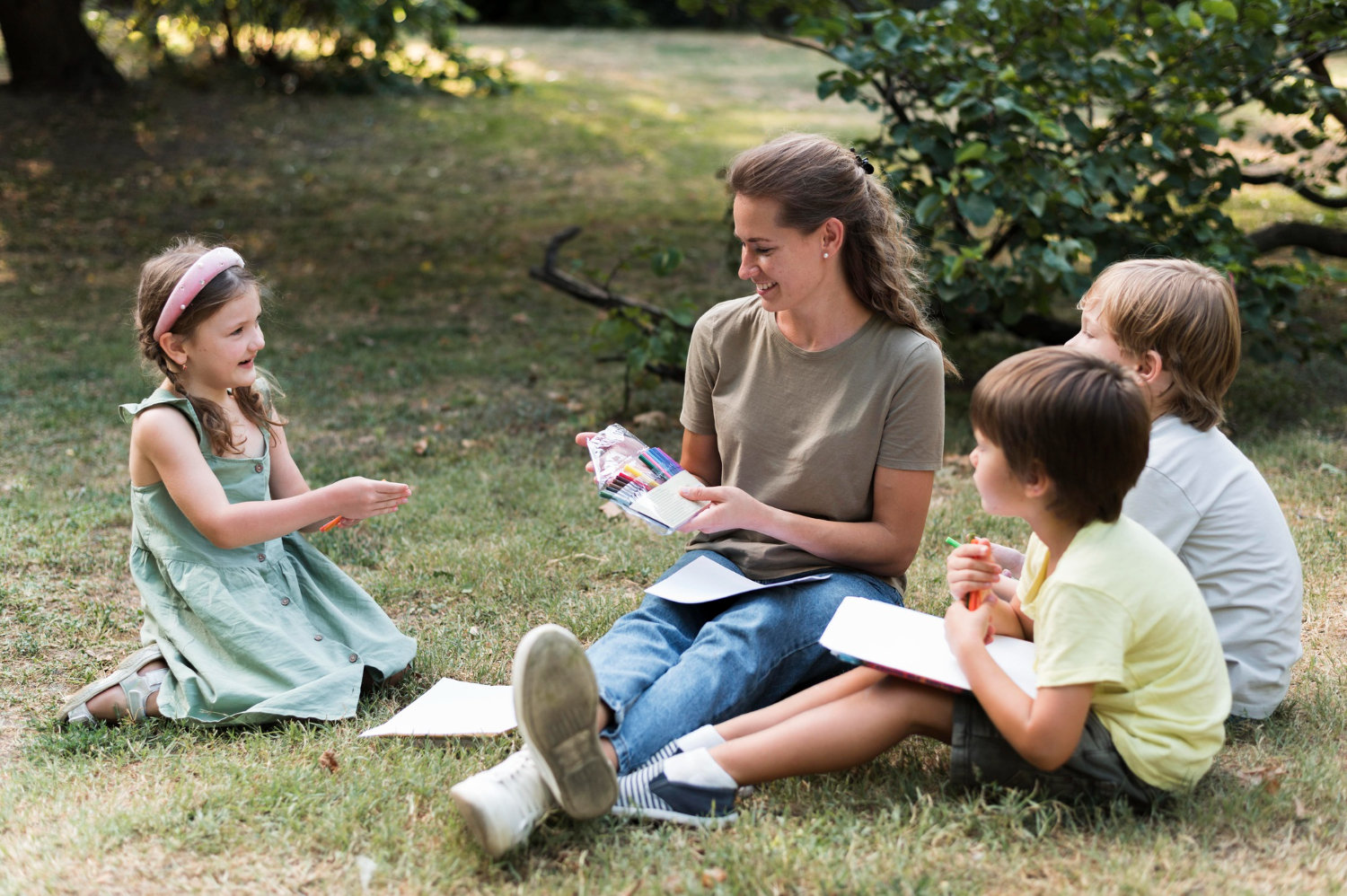
Outdoor learning has the advantage of being able to move the lesson out of the conventional classroom. It helps students gain educational, physical, mental, social, and emotional benefits and the ability and privilege of learning under trees as well as in other natural settings. Outdoor learning not only supports formal curriculum but also provides the children with the appreciation of the natural environment, activity break and personal/social skills.
Let’s take a look at different forms of outdoor learning and how students can benefit from them.
The Benefits of Outdoor Learning
Outdoor learning brings a multitude of benefits to the homeschooling experience.
Hands-On Learning
Outdoor environment enables children to expand their skills and knowledge of experiments, a variety of animals, or gardening, for instance. They make it easier for learners to relate with real life examples and retain whatever is being taught in class.
Physical and Mental Well-Being
As many researchers have postulated, more time in the outdoors translates into greater levels of physical fitness, as well as better psychological health. It helps in cutting down stress, enhancing mood, and as a result, increasing concentration levels and making children more absorbent.
Creative Thinking and Problem-Solving
The outside environment is in fact wide and vast and one can prove that it offers itself as a canvas for inventions and problem solving. From wandering through a rocky trail to try to find the best path or solving how to make a proper shelter for two people, the children can create strategies in an entertaining manner.
Connection with Nature
The use of the outside environment promotes the students’ appreciation of nature. Kids who are close to nature will have a sense of ownership of the environment and feel accountable for the same.
Ideas for Outdoor Learning Opportunities
Nature Walks and Hikes
Exploring nature on foot is one of the easiest natural learning activities that can be included in the homeschooling process. As you explore different trails or parks, you can:As you explore different trails or parks, you can:
Study Local Flora and Fauna: Pack a list of plants, trees, birds and insects so that they can be easily identified by the participants with the help of field guides or application. You can motivate your child to carry a nature journal with him or her and take drawing or note of what he or she observes.
Explore Geography and Geology: Elaborate on certain geological structures like rocks or boulders, rivers or mountains among others. It is also possible to discuss interactions of different species with the environment or stay focused on the features of this specific environment.
Incorporate Physical Education: Hiking is easily one of the most recommended outdoor activities that you can think of when you want your child to be more active. It also assists in the development of endurance, toning of muscles and gaining affection for outdoor activities.
Gardening Projects
Gardening is a great way to learn as far as you care to look – science, maths, responsibility, patience. Here’s how you can turn gardening into an educational experience.
Study Plant Life Cycles: Help your child learn about plant growing starting from the seed stage up to the production of seed, flowering and fruits. To study plants growing in different forms you can plant a variety to see how they grow.
Hands-On Math Lessons: Employ gardening as a medium for development of mathematics through such aspects as measuring the plants’ growth, multiplication of seeds, and data record.
Environmental Science: Talk about the importance of composting, the condition of soils, which practices to use when planting plants among other things. These options make it possible for your child to learn about pollinators, water, weather, and so much more all with the use of plants.
Outdoor Science Experiments
Outdoors many science related activities may not be easy to conduct when compared to indoor activities and this makes it ideal for the children to practise from. Some ideas include:
Physics in Action: When children are on the playground using their equipment such as swings and the slides, explain to them Newton’s laws such as gravity, friction, and momentum among others.
Weather Studies: To do this, start by installing a basic weather station to measure temperature, humidity, wind speed and amount of rainfall. The skills your child will learn are able to predict weather and be in a position to understand the causes or effects of various climates.
Ecology Experiments: Perform water quality assessment such as testing the pH of the water found in local water sources, culture viable microorganisms and determining effects of human activities on water bio-availability.
Outdoor learning provides a world of possibilities to homeschooling parents to extend children’s learning experience. Using the environment, you can design fun and interactive lessons that are more than just cramming knowledge in the children’s heads. Science wonders, nature walks, gardening, artistic works, and play are all forms whereby outdoor learning promotes a joy in learning and in the natural environment. These are the opportunities to enhance the homeschooling environment and encourage the child to learn in new and better ways.


