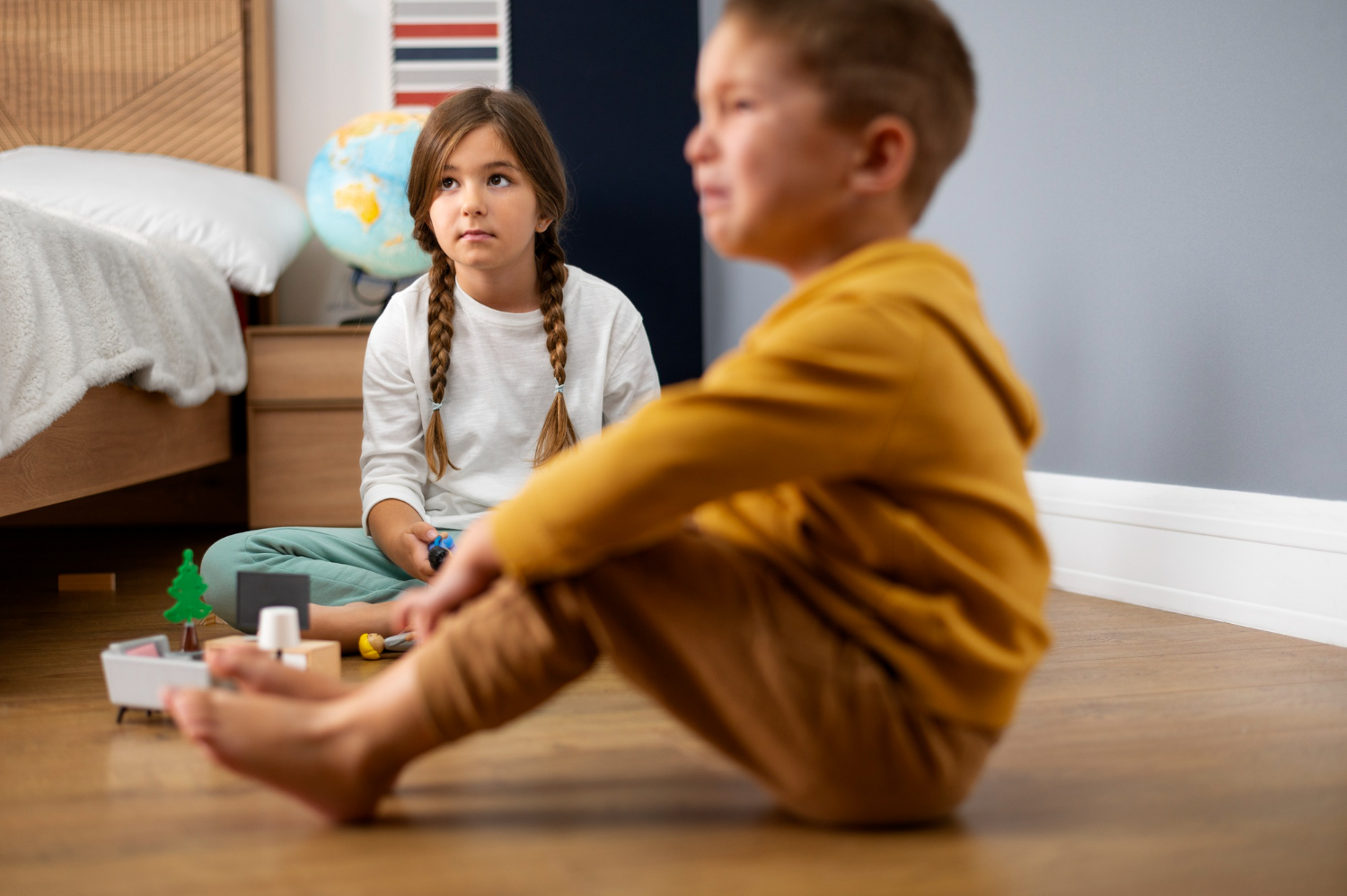
Preschool-age children are very active and developing rapidly and at the same time, but this period can be quite a strain for the parents and the children. It is during the phase of self attainment that the parent may experience changes in the child’s behavior that may be hard to control or mold. Learning about preschooler behaviour, implementing proper behaviour modification techniques and managing temper tantrums and other related behaviours will ensure that young children are brought up in the best manner.
This guide will support parents while dealing with these aspects of parenting a preschooler confidently and safely.
Understanding Preschooler Behavior
Preschool children are at the age where a child learns to demand, to feel and communicate, as well as explore things around him. They go around acting like that because they are in a particular stage of development and knowing this will assist you in how to handle the situation.
Exploration and Independence
At this age children are very inquisitive and ready to play with anything that they come across. As people they may try to push the limits and figure out what is right and wrong to do. This is the normal part of the children’s development as they try to make some sense of the things around them.
Emotional Expression
It is for this reason that the children in preschool age do not have well developed coping mechanisms to help them manage or express their feelings. They may get frustrated, angry or excited together with the rise of other bad behavior like hitting, yelling, or even refusal to obey instructions, directions among others.
Social Interaction
Preschoolers are often willful and it is challenging to teach them such skills as sharing, taking turns and cooperating. They interact with people at some level, but one may have certain issues like, one may lack the ability to put himself in others’ shoes.
Positive Discipline Techniques
Basically, discipline plays a significant role during the preschool years and it should require more reformation and training as opposed to reprimanding. Some of the positive discipline strategies assist children in understanding the right things to do while maintaining a good relationship between the parent and the child.
Set Clear Expectations
Preschool children should have social expectations clear to understand so that they do not fall short or overdo it. Ensure that the observations are expressed in ordinary language especially when stating rules and expectations. For example, instead of telling your child not to be naughty, use this gauge and tell her, “Friends are delicate; let’s try to touch them gently.”
Consistency is Key
It’s important for there to be consistency in how rules, policies and expectations are implemented. This is why when children understand that for every given conduct, there are always ramifications that are similar, then are obedient.
Use Time-Outs Wisely
Time-outs are helpful for preschoolers as these enable the child to think about the behavior that he or she has exhibited. Though, it is vital to understand that time-outs should not last long (1 min for each year of the child’s age); they should be used in a way to help the child to learn how to regulate his or her behavior and not as a form of punishment.
Reinforce Positive Behavior
People respond quite well to the positives; this means that good behavior should and must be encouraged. Always remember to encourage your child so when he or she obeys the directions given or is behaving well, you should say something like, “I like how you are sharing your toys with your friend.”
Offer Choices
You can give your preschooler choices to avoid power struggle and make the child feel powerful. For instance, you may ask a child, “would you like to wear your shoes now or your jacket?” Though the client feels they are being helped to arrive at the right decision they are never forced into making the right decision.
Managing Tantrums and Meltdowns
Temper tantrums or emotional outbursts known as meltdowns occur at this stage in development because children are learning when and how to express their anger and other emotions as well as learning how to control their actions and decision making abilities. The manner in which parents attend to these outbursts is very important for the child as well as for the parents’ own wellbeing.
Stay Calm
To control a tantrum, one should never get angry or lose his or her temper, when the child is having a tantrum. It can also cause conflict to inflame, or temper, or even die down. Breathe slowly and calmly to demonstrate to the child that you can handle his/her emotions and there is nothing to worry about.
Acknowledge Their Feelings
Make sure the child knows that you get that they may feel a certain way but the way then they go about it is wrong. For instance, you might use the following words, ‘Pointing at the toy, you said, I understand why you are angry because you cannot have it at the moment and that is okay to get angry, but it is not okay to hit like you did’.
Redirect Attention
Sometimes when the child starts to tantrum, one can make him or her change focus to something else so that they do not continue. Give them something else to keep them busy or an object that you can use to distract him or her and bring attention to another interesting thing.
Teach Emotional Regulation
Allow your preschooler to learn how to handle his or her feelings by coming up with ways of how to do it for instance through breathing exercises, counting to ten or when saying something out. These techniques employed over some time will help in lessening the occurrence and the onset of tantrums.
After the Tantrum
Why not wait when your child becomes calm and guide him towards the correct behavior of the situation that has happened. This is the chance to explain to your child what emotion is and how to manage it the following time round.
It is not very easy to deal with the behavior of a preschooler and this calls for a lot of patience, consistency and most importantly understanding of the age of the child. If you practice positive discipline with your child and know how to handle temper tantrums and meltdowns, you will have a happy child who is well on their way to developing healthy emotions as well as a good bond between you and your child. Please remember that each child is different and you should use an appropriate balance of discipline and affection to make your preschooler a success story during these early childhood development years.


